Get 10% Off plus 1lb of Free Ground Beef
on every order when you use Subscribe and Save at Checkout!

Why Smart Families Buy Beef in Bulk

written by

Jordan Ems

posted on

September 5, 2025

Why Smart Families Buy Beef in Bulk

Over a century ago, when my grandpa's grandpa began farming, families purchased their beef directly from the farmer, buying a whole or half-animal at a time. It was economical, practical, and ensured they knew exactly where and who their food came from. Today, we're carrying on that tradition, and we'd love to share why buying beef in bulk from our family farm isn't just a smart financial decision—it's a return to a better way of feeding your family.

Our first generation Farmers: Greenfield and Ruth

The Numbers Don't Lie: Bulk Buying Makes Cents

Let's talk about what you're really paying at the grocery store for grass-fed beef 

Fun fact: Under USDA guidelines, cattle can be labeled "grass-fed" even if they are later moved to a feedlot. Translation: In some cases, you are paying higher prices for cattle that are actually finished in feedlots. 

Compared to our premium pasture-raised beef. The difference is striking:

Cut Type Grocery Store Price Parsons Creek September Sale Bulk Price - Whole Beef (delivered to your door)
Ground Beef $7–$12/lb $09.21/lb
Stew Meat $10–$12/lb $09.21/lb
Brisket $12–$14/lb $09.21/lb
Sirloin $15–$26/lb $09.21/lb
Strip Steak $21–$31/lb $09.21/lb
Ribeye $25–$37/lb $09.21/lb
Filet Mignon $35–$75/lb $09.21/lb

When you buy our bulk beef, you pay one price for ALL cuts—from everyday ground beef to premium filet mignon.

Think about it: you're paying the same price per pound for ribeye that the grocery store charges for stew meat. You're getting (premium) filet mignon at ground beef prices. That's not just savings—that's transformational for how your family eats.

Beyond the Savings: The Parsons Creek Difference

Our cattle graze freely on diverse pastures under sunny Missouri skies, just as they were meant to. They're not rushed through processing facilities or transported across the country. Instead, they live their entire lives on our land, cared for by our family, resulting in beef that tastes the way it's supposed to.

Fifth and sixth generation farmers welcoming a new baby calf

Here's what those grocery store price tags can't tell you: the story behind your beef. When you buy from us, you're not just purchasing meat—you're investing in a legacy that spans five generations of careful stewardship.

The 5 W’s - Answered

Who raised your beef (our family, for five generations, with the sixth currently in training)

Where it came from (our Missouri pastures, you can visit)

What it was fed (diverse native grasses we manage via regenerative farming and grain finished in the pastures, not a feedlot)
When
it was processed (we'll contact you within 24 hours of receiving your reserve deposit to discuss the exact date)
Why The Big Four Can't Compete With Our Direct Model

The reason grocery store beef costs so much more isn't just about retailer markup—it's about the massive industrial supply chain that dominates today's beef industry. The big meat conglomerates operate through an inherently expensive model where cattle often travel through seven or more different steps:

  1. Foreign cattle operations (often Brazil or other countries)
  2. International shipping and import facilities
  3. Domestic feedlots for finishing
  4. Transport to mega-processing facilities
  5. Distribution centers
  6. Regional warehouses
  7. Grocery stores

Each step incurs additional costs, including handling fees, transportation expenses, and profit margins. When fuel prices rise, labor costs increase, or regulatory requirements change, these costs multiply across their entire network and get passed directly to you at the checkout counter.

Compare that to our straightforward path:

  1. Born and raised on our Missouri pastures
  2. Processed at our trusted local facility
  3. Shipped directly from our farm to your door

Three steps instead of seven or more. No import fees. No multiple middlemen taking their cut. No extended storage and warehousing costs eating into quality and adding expenses. This simplicity isn't just more efficient—it translates directly into better value for you. You get premium, pasture-raised beef at a lower cost per pound than commodity grocery store beef that's traveled thousands of miles through countless hands before reaching your family.

Third, fifth, and sixth generation farmers at work (although Cash dog is the star of this show)

Making Bulk Buying Work for Your Family

We understand that buying a quarter, half, or whole beef feels like a big decision. That's why we've designed our program to be as family-friendly as possible:

Flexible Payment Options: Pay a deposit when you order ($250 for a quarter, $500 for a half, $750 for a whole), then pay the balance once your beef is ready to be shipped. We even offer installment payment plans because we believe every family should have access to premium beef.

Custom Processing: Work directly with our local processor to specify exactly how you want your beef cut. Love thick steaks? Prefer more ground beef for busy weeknight dinners? Our processor will make sure your beef is processed to fit your family's eating style.

All-Inclusive Pricing: No surprises, no hidden fees. Processing and shipping are included in our prices, so you know exactly what you're paying from the start.

Perfect Timing: Your beef typically ships within 30-45 days of ordering, giving you time to prepare your freezer space and plan your meals.

More Than Just Economics: It's About Community

When you choose to buy in bulk from Parsons Creek Steak, you're doing something bigger than saving money on your grocery bill. You're supporting a small family farm, keeping your food dollars in the local economy, and ensuring that future generations will have access to sustainably raised, premium beef.

You're also joining a community of families who understand that good food is worth investing in. There's something deeply satisfying about opening your freezer and seeing it stocked with beef you know was raised with care, processed with attention to detail, and delivered with pride.

Ready to Make the Switch?

If you're tired of grocery store prices and grocery store quality, we'd love to welcome you to the Parsons Creek family. Our half beef option is perfect for most families looking to experience premium beef at exceptional value—255 pounds of the finest cuts for just $09.60 per packaged pound (September sale price), which is less than what most grocery stores charge for basic ground beef.

Whether you start with a quarter beef to try us out, choose our popular half beef for the best family value, or go all-in with a whole beef for maximum savings, we're confident you'll taste the difference that comes from five generations of farming expertise and genuine care for what we do.

Visit our bulk ordering page to get started, or reach out to us with any questions. We're always happy to talk about our cattle, our process, and how bulk buying can work for your family's budget and lifestyle.

After all, good beef isn't just about feeding your family—it's about feeding them well. And that's a tradition worth investing in.
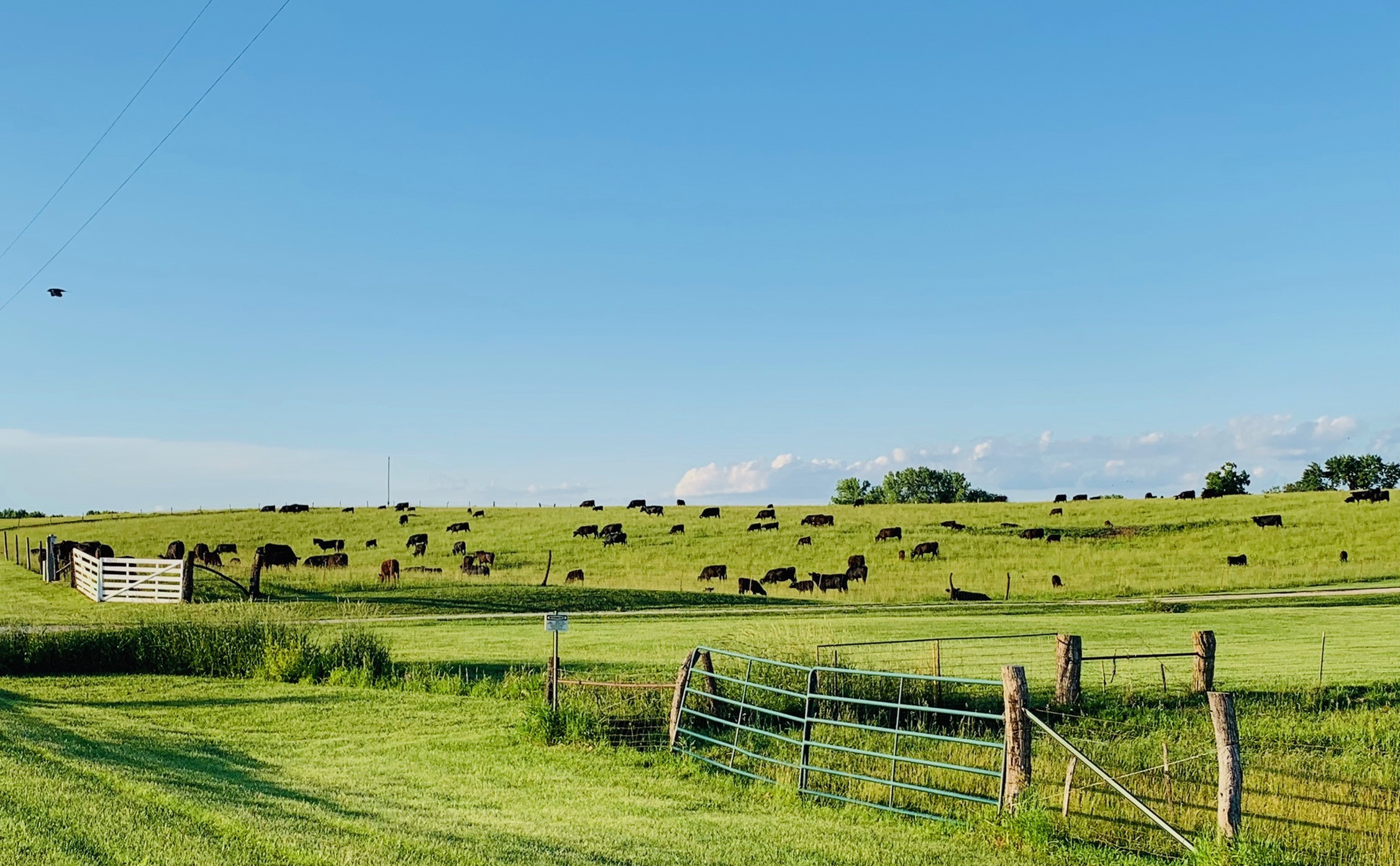
Our ladies at work

_________________________________________________________________________________________________

Ready to experience the Parsons Creek difference? Contact us today to discuss bulk beef options that fit your family's needs and budget, or with any questions on the bulk buying process.

More from the blog

The Food Pyramid Just Got Flipped—And It All Starts in the Dirt

The Food Pyramid Just Got Flipped—And It All Starts in the Dirt On January 7th, Secretary Brooke Rollins and Secretary Robert F. Kennedy Jr. unveiled the new Dietary Guidelines for Americans, 2025-2030. With them came something we haven't seen in over a decade: an actual food pyramid. But this one's different. It's inverted. At the very top—the foundation of healthy eating—sits protein, dairy, healthy fats, vegetables, and fruits. Real, whole, nutrient-dense food. "Eat real food," Secretary Kennedy said. "These guidelines return us to the basics." Whether you agree with the intricacies of the guidelines or not, I think we can all agree that eating real food can’t hurt.  This isn't just about what's on our plates. It's about where that food comes from. And if we're going to eat real food—truly nutrient-dense food—we need to think about what's underneath it all. We need to think about the soil. From the Pyramid to the Ground Just one month before the food pyramid announcement, the USDA launched a $700 million Regenerative Pilot Program aimed to help American farmers adopt practices that improve soil health, enhance water quality, and boost long-term productivity, all while strengthening America’s food and fiber supply.  You can't have nutrient-dense beef without healthy pasture. You can't have a healthy pasture without living soil. You can't have living soil without regenerative practices that build instead of deplete. The new food pyramid says: prioritize protein from whole food sources. The Regenerative Pilot Program says: We're going to help farmers raise that food the right way. Healthy soil → real food → healthier people. It's the first time in my lifetime that I've seen the federal government connect these pieces. And for farmers like us who've been quietly working toward this for generations? It feels like hope. What We've Been Doing All Along The Regenerative Pilot Program focuses on soil health, water management, and natural vitality. If you've been reading our blog, you already know what that looks like. Cover Crops - We plant sorghum, triticale, cow peas, and winter mixes to prevent erosion and build nitrogen naturally. Healthy soil is never bare. No-Till Farming- We use a no-till drill to plant new crops right into the residue of the last one, protecting soil structure and those hardworking microorganisms underground. Rotational Grazing - Our Black Angus cattle move through pastures regularly. They graze and fertilize. We're working toward "mob grazing"—mimicking the way buffalo moved across the Great Plains for thousands of years. These practices build soil instead of mining it. They create beef that's more nutrient-dense because it comes from richer ground. And now, the USDA is putting $700 million behind helping more farmers do exactly this. Why This Gives Me Hope For years, we've watched good farmers want to do the right thing but get buried in red tape or worn down by a system that didn't value what they were trying to build. The Regenerative Pilot Program changes that. One application instead of ten. Whole-farm planning instead of fragmented bureaucracy. Real support for practices that actually work. This isn't just validation—it's transformation. Young producers won't have to fight as hard as Christian did when he moved back to the farm. New farmers can start with regenerative practices. Families can transition to soil-building methods with actual financial support. And with more regenerative farming, we all get access to better food. The beef in grocery stores and on dinner tables becomes more nutrient-dense, raised on healthier soil. The cycle strengthens. The Connection We've Been Missing The new Dietary Guidelines say: "Better health begins on your plate—not in your medicine cabinet." I'd take it one step further. Better health begins in the soil. When we talk about chronic disease in America, we can't ignore where our food comes from. The nutrients in beef trace back to the ground it came from. The flavor, the tenderness, the marbling—it all connects to soil health. The new food pyramid recognizes that real food matters. The Regenerative Pilot Program recognizes that real soil matters. And out here at Parsons Creek, we've always known both are true. What Comes Next I keep thinking about my daughter running around the farm in boots three sizes too big. She's inheriting not just land, but soil that's been tended, loved, and cared for. That's the promise of regenerative agriculture.  The new Dietary Guidelines told Americans to eat real food. The Regenerative Pilot Program is making sure farmers can grow it. And families like ours—who've been doing this work quietly for decades—now have support to keep going and expand. Papa always says, "You work for the land, and if you do it right, the land provides." The food pyramid starts at the top with protein and healthy fats. But we know the truth—it really starts in the dirt. In the soil we build, the practices we follow, the stewardship we choose. From our farm to your table, we're hopeful. Hopeful for the soil we're healing. Hopeful for the farmers getting support. Hopeful for the families choosing real food. Hopeful for the future we're building together, one regenerative practice at a time. Want to learn more about the USDA Regenerative Pilot Program? Visit nrcs.usda.gov/programs-initiatives/regenerative-pilot-program Ready to taste what healthy soil can do? Shop Parsons Creek Steak and support regenerative agriculture with every meal.

'Twas the Night Before Christmas at Parsons Creek

'Twas the night before Christmas, and all over the farm   Each cow lay bedded, with calves under their arm  Stars overhead with the world in sight,   We all could feel the magic of this glorious night  Each pillow, a head to comfort to sleep,  Rest easy, dear Farmers, just count the sheep  Dancing snowflakes on windows lead us to our dreams  With candies and cookies, and coffee and cream  When out by the creek there arose such a sound, A mama cow lowing as snow swirled around; Away to the pasture they flew like a flash, Their truck headlights cutting through night with a splash. Christian and Madison checked on the herd with great care, With boots crunching softly through cold winter air; The children were bundled in coveralls tight, As they scattered sweet hay in the pale moonlight. The moon on the breast of the new-fallen snow Gave luster to a proud Mama with a new found glow; When what to their wondering eyes did appear, But a newborn calf standing, so precious, so dear! With his grandfather's wisdom and hands weathered strong, Christian tended that calf while the family looked on; More rapid than eagles, they worked as a team, Five generations united—fulfilling the dream. "Now, Gramps! Now, Great-Gramps! Now, all who came before! You walked this same land through each season's encore! From grandfather's boyhood to memories held tight, We honor your legacy here Christmas eve night!" For over a century through sunshine and rain, This family has tended the grassland and grain; With hands that care daily for each living soul, They've nurtured this farm—it's their heart, it's their goal. The cattle roam free under wide-open skies, No hormones, no shortcuts—just truth in their eyes; Raised naturally, humanely, with love and respect, From pasture to table, that bond they protect. Christian thought of those summers, those holidays past, When Meadville's sweet breezes through tall grasses passed; His grandfather's lessons, the values instilled, Now live on in pastures his own children filled. Madison smiled as she watched the calf nurse, Reflecting on blessings—their wonderful curse: To work every day, rain, snow, or sunshine bright, But to know that this calling was perfectly right. They thought of the families near and afar, Who gather for Christmas beneath their own star; With Parsons Creek beef on their tables with pride, Creating the memories that forever abide. For lasting connections are made when we eat, When family surrounds us, when stories repeat; From their farm to your table, through each generation's hand, They're honored to nourish both family and land. The creek still runs clear where it always has flowed, Through seasons and decades on this county road; Five generations have walked this same ground, And in faith and in family, true purpose is found. So Christian spoke soft, ere they drove out of sight, "Merry Christmas to all—may your tables be bright! May you gather with loved ones and hold memories near, From our family to yours—we're blessed you are here!" From all of us at Parsons Creek Steak, we wish you and yours the most wonderful Christmas. Thank you for being part of our family's story.

The Bread Basket: November Harvest and the Tables We Gather Around

November is when this old farm shines like a new penny. The light slants low and golden across the pastures. The cattle's breath hangs in the cold morning air. And somewhere between the first hard frost and Thanksgiving, something shifts in the way we move through our days. We're not just working the land anymore—we're reaping what we've sown, literally and figuratively. My grandpa used to say, "You don't work the land. You work for the land, and if you do it right, the land provides." November is when you find out if you did it right. The Little Red Hen Had It Right (Sort Of) Remember that children's story? The Little Red Hen asks for help planting wheat, harvesting it, milling it, baking it—and everyone says "not I" until there's fresh bread on the table. Then suddenly everyone wants a piece. The story ends with the hen eating her bread alone. Which, frankly, seems a little harsh. Out here in our small, remote corner of northern Missouri, harvest season tells a different story. Sure, we each tend our own operations. Christian cares for our cattle every day, “come hell or high water,” as the saying goes. But come November? That's when farmers come together. It's an old tradition, older than our five-generation farm. It's the tradition of trading—not just goods, but time, muscle, knowledge, and care. Your neighbor helps you harvest your crops, and you help them sort their pairs. Someone loans you their trailer; you return it with a cooler of beef (the Parsons Creek way). The land provides, yes. But it's the people working for the land, together, who make harvest season what it is. And we want to share what we’ve reaped with you!  Check out our Holiday Specials  The Bread Basket: Traditional Beef Recipes Worth Celebrating  Here are a few recipes that show up on our tables every November, the kind that have been traded between farm families and written on stained index cards tucked into recipe boxesBrisket: The Crown Jewel of Slow Cooking. If there's one cut that embodies the "low and slow" philosophy of November cooking, it's brisket. Whether you're smoking it for hours until the bark gets dark and the meat pulls apart like butter, or braising it in the oven with onions and root vegetables, brisket rewards patience. (We've got our 4-5 lb. briskets on sale right now—perfect for a smaller gathering—and 10-12 lb. beauties if you're feeding the whole extended family (or want leftovers for days, which, let's be honest, is the real goal). Pan-seared Ribeye: Our thick-cut ribeye gets a deep, crackling crust in Nanny’s trusty cast-iron skillet, nothing but salt, pepper, and a swath of real butter sizzling in the pan. After that perfect sear locks in all the juices, the whole skillet slides right into a hot oven to finish cooking through, filling the house with that rich, meaty aroma that means something special is happening in the kitchen. It comes out tender as can be, with those beautiful caramelized edges and a rosy center that would make any Sunday supper or Thanksgiving dinner feel like the celebration it ought to be.  Our Filet mignon recipe isn't something we stumbled upon—it's been on our Thanksgiving table for as long as I can remember. Every year, we take the most beautiful cuts from our herd, the ones we've been saving for something special, and prepare them the way my grandmother taught us. Cast-iron screaming hot, nothing fancy—just good salt, pepper, and butter. Then, peppercorn sauce, rich and velvety, is a holiday classic. When this hits the table, it's not just supper—it's Thanksgiving, all our family gathered around, a reminder of every reason why we do what we do on this farm. It's recipes like these that inspired our holiday specials.  The Folklore of the Feast I believe that abundance creates abundance. That generosity returns to you; That feeding people well is an act of hope for the future. Every farm family I know has their feast traditions. Some serve the same meal every Thanksgiving—same recipes, same serving dishes, same placement for fifty years. Others make room for whatever came out of the garden or off the pasture that year. But they all have this in common: the table is full, and there's always room for one more. Working For the Land, Together Here's what five generations of farming have taught my family: the land provides, but only if we provide for it first. And we can't do that alone. This November, I'm grateful for: The land that supports our cattle and our familyThe farmers who trade time, goods, and knowledge with usThe beef that comes from our pasture to tables across the countryThe cold weather that makes us slow down, cook well, and gather closeThe tradition of breaking bread together, which is older than any of us and will outlast us all So if you're cooking beef this November—Whether it be Parsons Creek Steak,  your local farm, or wherever you source your food—take your time with it. Use a recipe that's been handed down. Invite people over. Set an extra place at the table. The Little Red Hen ate her bread alone, but that's not how this story ends for us. Out here in our small, remote corner of the earth, the harvest is something we celebrate together. From our farm to your table, we're honored to be part of your family traditions this November.

with customization by Taste Profit Marketing